Creative Ecology: How Biomimicry Reshapes Strategic Leadership
— by
Steven Haynes
{
“title”: “Creative Ecology: How Biomimicry Reshapes Strategic Leadership”,
“meta_description”: “Discover how the intersection of creativity and natural systems informs high-level decision-making, operational efficiency, and sustainable strategic growth.”,
“tags”: [“biomimicry”, “strategic leadership”, “systems thinking”, “operational excellence”, “innovation”, “sustainability”],
“categories”: [“Business”, “Science”],
“body”: “
The Biological Blueprint for Operational Logic
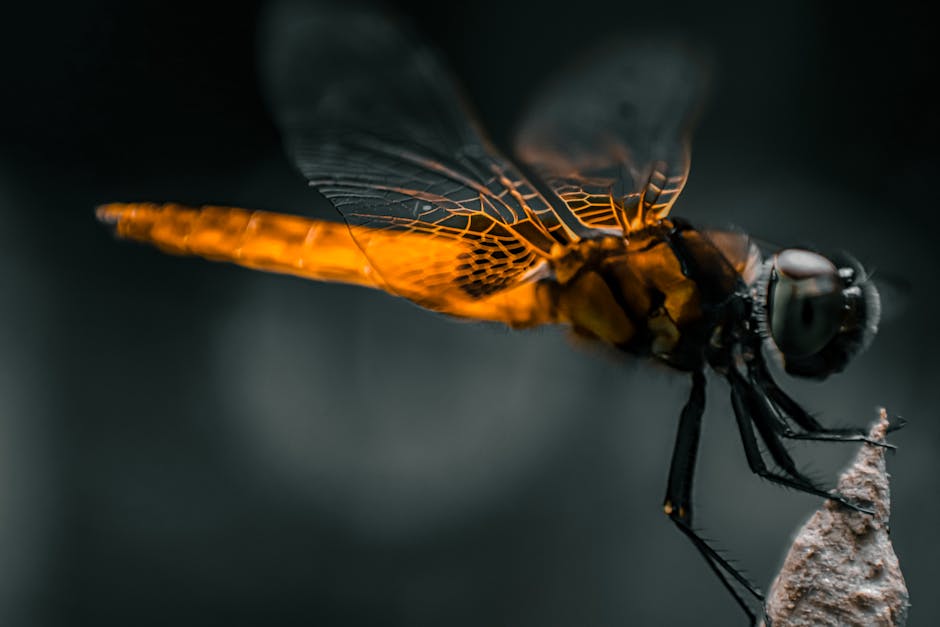
Nature does not innovate through vanity; it optimizes through ruthless efficiency. Every adaptation in a biological system is a solution to a problem of survival, energy expenditure, or competitive positioning. Leaders who view the natural world as merely a backdrop for environmental policy miss the most sophisticated R&D laboratory in existence. When we apply creative thinking to natural structures, we stop viewing nature as a resource to be extracted and begin treating it as an architectural model for robust systems.
The integration of nature-inspired design—or biomimicry—into business strategy shifts the focus from linear production to circular regeneration. This approach mandates a fundamental redesign of operational frameworks, replacing brittle, top-down hierarchies with the decentralized, self-correcting logic of a forest floor. In this paradigm, creativity becomes the tool that translates evolutionary success into corporate resilience.
Entropy, Iteration, and Strategic Selection
Nature operates under the principle of selective pressure, where inefficient structures are discarded in real-time. In a corporate environment, this is analogous to the feedback loop of effective decision-making. Organizations that survive long-term are those that treat their strategies as hypotheses subject to environmental testing. By mirroring the iterative nature of organic evolution, high-performers can mitigate risk while maintaining the flexibility required to pivot during market volatility.
Strategic creativity requires us to observe how complex ecosystems distribute resources. Unlike traditional businesses that hoard capital to insulate against failure, resilient biological entities optimize for resource flow. When you align your execution strategy with these principles, you reduce systemic waste and increase the velocity of your organization’s response to external stimuli.
The Intersection of Artificial Intelligence and Organic Intelligence
The rise of generative AI provides a unique opportunity to synthesize the principles of natural complexity with digital speed. Modern algorithms are increasingly modeled after neural structures found in nature, demonstrating that the future of computing lies in mimicking organic thought processes rather than brute-force calculation. By framing strategic thinking as an exercise in synthetic ecology, leaders can leverage these tools to simulate complex outcomes before committing physical capital.
This is not merely about sustainability in the environmental sense; it is about cognitive and structural sustainability. A company that mimics the resilience of a swarm or the modular efficiency of a coral reef is inherently more stable than one built on rigid, human-centric models that ignore the laws of thermodynamics and entropy.
The Operational Takeaway
To implement this, you must move beyond aesthetic appreciation of the natural world. Conduct an audit of your internal workflows. Where are you building ‘brittle’ dependencies? Where is your organization failing to ‘self-heal’ when a process breaks down? True leadership involves translating the quiet, relentless creativity of nature into the bold, measurable success of an organization operating at the edge of its capacity. For further exploration of professional optimization, visit The BossMind network.



Leave a Reply